

Industry InsightsSTATE OF THE RESTAURANT INDUSTRY
WRA provides accurate, up-to-date information on topics specific to the foodservice industry. WRA members conveniently receive up-to-the-minute news via emails, alerts, e-Newsletters and printed materials as a benefit of membership. |
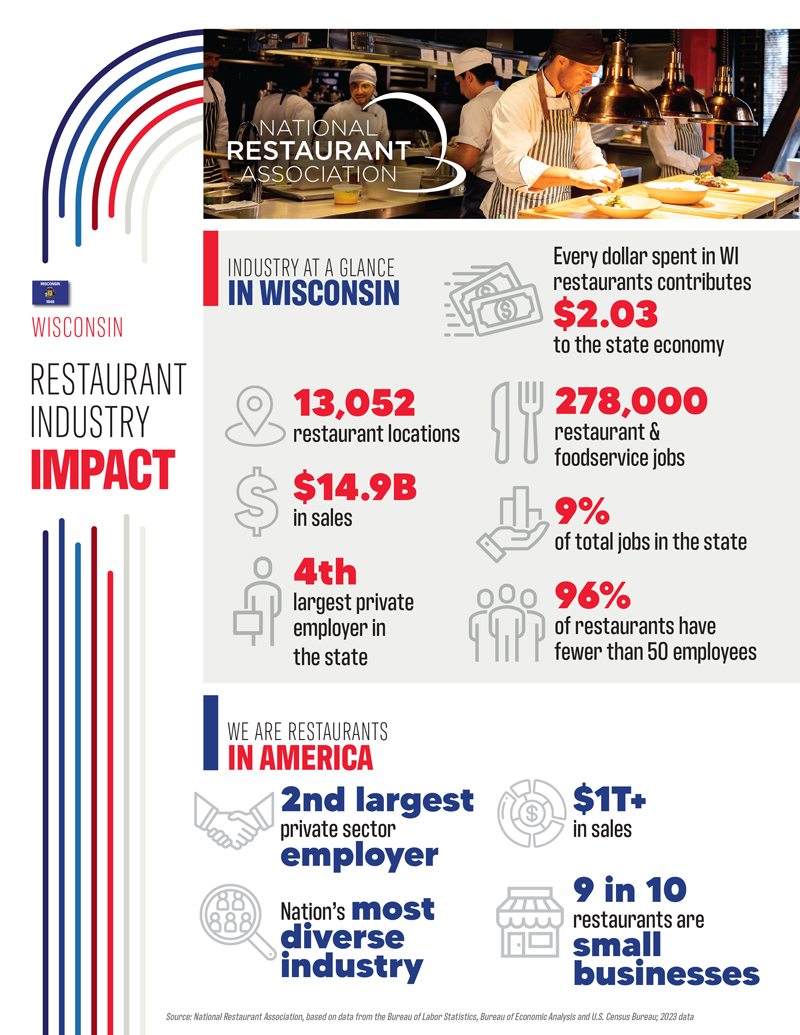
The Restaurant Industry in Wisconsin
|
INDEPENDENT SPIRIT
Most restaurants are independently owned small businesses owned and operated by hardworking individuals and families who have a passion for providing good food and warm hospitality. TIGHT MARGINS Restaurant operators face many hurdles including extremely narrow margins, unpredictable food costs and being a highly labor-intensive industry. PROVIDING JOBS AND OPPORTUNITY Restaurants are a driving force in Wisconsin’s economy. They provide jobs and build careers for thousands of people. The restaurant industry is one of the largest private industry employers in Wisconsin and ranks among the fastest growing industries in the state. THE CORNERSTONES OF COMMUNITIES Restaurants are an important part of their communities, typically giving of their time and resources as leaders and supporters of a variety of causes to make a positive difference. |
BASIC STATS
Statistics provided by the National Restaurant Association For national restaurant industry stats, visit https://restaurant.org/research-and-media/research/industry-statistics/ Check our Press Releases section for results of the latest surveys of Wisconsin Restaurants. |
Take a look at this week's restaurant industry insights released by the National Restaurant Association:
- Restaurant Performance Index rose 0.2% in May
- Restaurant operators reported mixed sales and traffic readings in May
- 2026 Summer Tourism & Dining Report: Key Trends Shaping Restaurant Demand
- Restaurant and lodging job openings rose in May
- U.S. labor market growth softened in June, as labor participation drops sharply
- Restaurant job growth was choppy during the first half of 2026
Monthly Insights
The environment for consumers, while still less than ideal, has improved somewhat in recent weeks. The national average for a gallon of regular gas, which had been above $4 for nearly three months, is currently down about 50 cents from its mid-May peak. The recent agreement to reopen the Strait of Hormuz increases the likelihood that pump prices could continue to trend lower in the weeks ahead.
The resurgent U.S. labor market has also helped steady jittery consumers. Employers added more than 500K jobs during the past three months – a pace of payroll expansion not seen in more than two years – keeping the unemployment rate historically low at 4.3% and suggesting the labor market remains in balance.
Through it all, consumers have maintained their appetite to spend – and not just at the gas pump. The U.S. Census Bureau’s May retail sales report showed continued strength across several sectors, even as restaurant sales paused their recent upward trajectory.
Household balance sheets on the whole remain relatively healthy as well. Though debt levels continue to rise, they remain manageable when compared to disposable income. Household wealth also continues to trend higher, lifting the spending of consumers with homes and investments.
Overall, recent trends in some key indicators suggest that consumers may have weathered the storm of high gas prices. While risks to the outlook remain significant, it’s likely that consumers will maintain their willingness and ability to continue spending throughout 2026.
The resurgent U.S. labor market has also helped steady jittery consumers. Employers added more than 500K jobs during the past three months – a pace of payroll expansion not seen in more than two years – keeping the unemployment rate historically low at 4.3% and suggesting the labor market remains in balance.
Through it all, consumers have maintained their appetite to spend – and not just at the gas pump. The U.S. Census Bureau’s May retail sales report showed continued strength across several sectors, even as restaurant sales paused their recent upward trajectory.
Household balance sheets on the whole remain relatively healthy as well. Though debt levels continue to rise, they remain manageable when compared to disposable income. Household wealth also continues to trend higher, lifting the spending of consumers with homes and investments.
Overall, recent trends in some key indicators suggest that consumers may have weathered the storm of high gas prices. While risks to the outlook remain significant, it’s likely that consumers will maintain their willingness and ability to continue spending throughout 2026.
|
••• BY THE NUMBERS •••
|
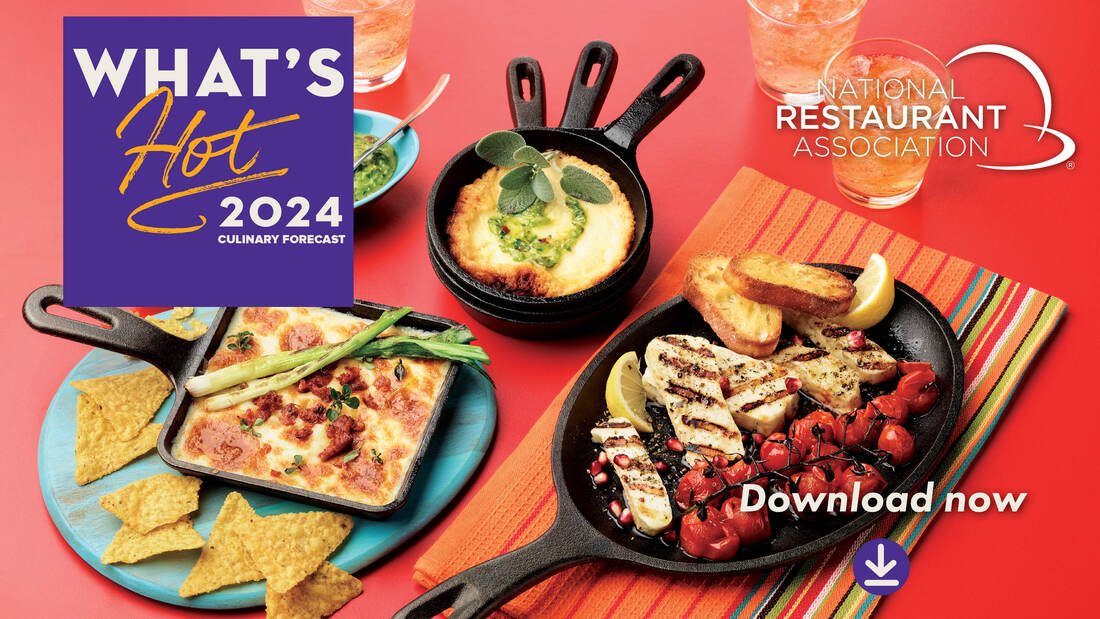
What's Hot 2026 Culinary ForecastThe National Restaurant Association’s 2026 What’s Hot Culinary Forecast offers a sneak peek into the flavors and creative food items that will soon hit menus everywhere.
Operators seeking to satisfy customers who are craving comfort, hungry for adventure, and looking for value and quality, will find the answers they need in our new report. The report offers a deep dive into the trends and preferences consumers will want to explore. |
Top 10 Overall Trends for 2026
- Local sourcing – Restaurants are deepening community ties by featuring ingredients from nearby farms and producers, emphasizing freshness, and sustainability.
- Comfort foods – Familiar classics like soups, stews and burgers offer diners a sense of nostalgia and emotional connection.
- Value menus and options – Operators are balancing creativity and cost by delivering satisfying meals that remain affordable for price-conscious diners.
- Smashed burgers – Blending retro appeal with customizable, high-flavor twists; this diner staple has reemerged as a social-media favorite.
- Clear menu labeling, icons, and cues – Simple visual indicators help diners make quick, informed choices about ingredients, calories and sustainability.
- Allergen-friendly menus – Restaurants are expanding inclusive options for guests with dietary restrictions, from gluten-free items to nut- and dairy-free dishes.
- Global comfort foods – Chefs are reinterpreting homestyle dishes from around the world, blending authenticity with local influence.
- “Cleaner” recipes with fewer additives and dyes – Consumers are prioritizing ingredient transparency, inspiring operators to include simpler, less-processed options.
- Proteins as add-ons – From smoothie bowls to pancakes, protein is becoming a customizable boost for both taste and nutrition.
- Compostable and reusable packaging – Eco-friendly materials are replacing single-use plastics as restaurants reduce waste and improve sustainability.
2026 State of the Restaurant Industry Report

Fueled by an increase in sales and strong pent-up demand to dine out, the restaurant industry is cautiously optimistic about 2026.
Consumer spending is expected to push industry sales to a projected $1.55T nationwide, with real (inflation-adjusted) gains of 1.3% projected. Moreover, the desire to visit restaurants as budgets allow will drive that growth.
Operators say they’ll add approximately 100K jobs, bringing total industry employment to 15.8M and fueling economic growth in their communities. They also say they’re looking to invest in more technology that boosts efficiency and strengthens guest connections.
The 2026 State of the Restaurant Industry report is free to Wisconsin Restaurant Association restaurateur members ($349 for non-members). WRA members wishing to access the report, need to log into the National Restaurant Association Store before downloading the report. There’s a login link in the bar at the top. If you experience difficulties accessing the report for free, email [email protected] to request to be linked to your company's membership record.
Consumer spending is expected to push industry sales to a projected $1.55T nationwide, with real (inflation-adjusted) gains of 1.3% projected. Moreover, the desire to visit restaurants as budgets allow will drive that growth.
Operators say they’ll add approximately 100K jobs, bringing total industry employment to 15.8M and fueling economic growth in their communities. They also say they’re looking to invest in more technology that boosts efficiency and strengthens guest connections.
The 2026 State of the Restaurant Industry report is free to Wisconsin Restaurant Association restaurateur members ($349 for non-members). WRA members wishing to access the report, need to log into the National Restaurant Association Store before downloading the report. There’s a login link in the bar at the top. If you experience difficulties accessing the report for free, email [email protected] to request to be linked to your company's membership record.
The Changing Restaurant Technology LandscapeThe National Restaurant Association’s Restaurant Technology Landscape Report 2024 looks at how operators are relying on tech to boost their bottom line. Download this report for insights on how to match tech investments to the customer base you serve.
|
“Being a member gives me the comfort of knowing that WRA resources are available on almost every issue, problem or concern that I may face as a restaurant owner.”
– DAVID FLANNERY, OWNER APPLE HOLLER RESTAURANT, STURTEVANT
Facts at a Glance
|
Keep up with all of the latest news in the restaurant industry and stay up to date with what's happening on our news & alerts page. |